
 EarlyBeginnings est. 1964
In 1914 the City of Fort Worth purchased the land that would eventually become the Fort Worth Nature Center & Refuge (FWNC&R). At that time the City was building the Lake Worth reservoir on the West Fork of the Trinity River to provide a dependable source of water for drinking and firefighting, and acquired all of the land surrounding the new lake to protect its watershed.
Between 1934 and 1937 the Civilian Conservation Corps operated Camp 1816 on Lake Worth and during their tenure many improvements were made all around the lake, including the area now encompassing the FWNC&R.
Fast forward to 1964 when the Fort Worth Audubon Society began a community initiative to set aside some land for a dedicated nature refuge. The Park and Recreation Board of Commissioners responded by creating the Greer Island Nature Center and Wildlife Refuge on 380 acres of land and water on the upper reach of Lake Worth. Within ten years, an additional 3,000 acres of city-owned land contiguous to Greer Island were added to the park and its name was changed to the Fort Worth Nature Center & Refuge.
Fort Worth Nature Center & Refuge Today
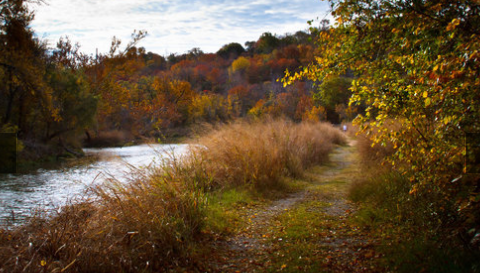
At its current size of 3,621 acres the FWNC&R is a beautiful jewel in the City of Fort Worth’s park system. It is located at the junction of two major North Central Texas ecosystems – the Fort Worth Prairie and the Western Cross Timbers – very high quality representative samples of both of these ecosystems can be enjoyed within the park along with several miles of river frontage and acres of wetlands. A twenty-mile system of natural surface trails provides access to various areas along with seven miles of paved roadways.
Visitors can enjoy static and live animal exhibits at the Hardwicke Interpretive Center located in the center of the park. The FWNC&R’s education staff offers guided walks and classes to the public every weekend and hosts guided tours and outreaches for school groups during the week. Other park attractions include a small herd of plains bison, a prairie dog town, a marsh boardwalk and a Texas Parks and Wildlife Department-sanctioned paddling trail with a floating dock at the trailhead.
Natural Resource Management
The work of the FWNC&R’s natural resource management staff has been recognized with awards including the park’s designation as a National Natural Landmark by the U.S. Department of the Interior in 1980 and a Lone Star Land Steward award for excellence in land management practices from Texas Parks and Wildlife in 2009. Ecological restoration and management activities include prescribed burning, invasive plant and animal removal, operation of a native plant greenhouse to provide locally-sourced materials for projects, and facilitation of research studies by local universities.